
How to Recognise the Warning Signs of Online Predators
In our previous article about digital blindspots we explored how easily parents can overlook the hidden risks children face in digital spaces. Games, chat platforms and social media allow young people to connect with friends across the world. Unfortunately these same spaces are also used by individuals who deliberately target children.
Understanding how online predators operate is one of the most powerful tools parents have to protect their children.
Where Predators Often Operate
Predators usually look for environments where children already feel safe and comfortable. These include multiplayer games such as Roblox and Fortnite as well as social messaging platforms. They rarely begin with obvious or suspicious behaviour. Instead they gradually build trust over time.
According to the National Center for Missing & Exploited Children reports of online enticement involving minors have increased significantly in recent years as digital platforms continue to grow.
The Five Stages of Online Grooming
Researchers Sara Craven, David Brown and Elizabeth Gilchrist studied grooming behaviour and identified common patterns predators use when targeting children online. Understanding these stages can help parents recognise warning signs earlier.
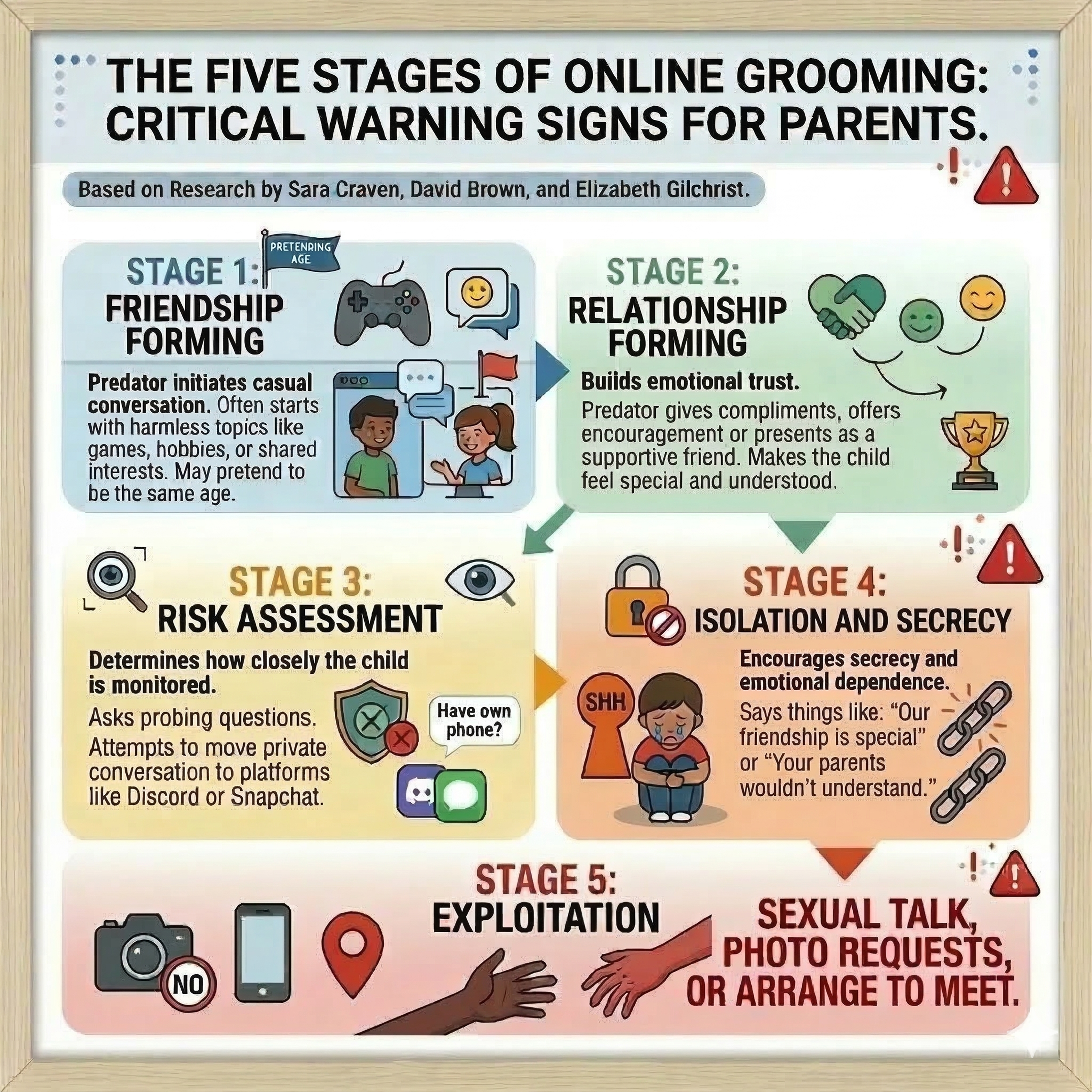
- Friendship Forming: The predator initiates casual conversation. This often starts with harmless topics such as games, hobbies or shared interests. They may also pretend to be the same age as the child.
- Relationship Forming: The predator begins building emotional trust. They may give compliments, offer encouragement or present themselves as a supportive friend. The goal is to make the child feel special and understood.
- Risk Assessment: The predator tries to determine how closely the child is monitored. They may ask questions like:
- Are your parents nearby?
- Do your parents check your messages?
- Do you have your own phone? At this stage they often attempt to move the conversation to private platforms like Discord or Snapchat.
- Isolation and Secrecy: The predator encourages secrecy and emotional dependence. They may say “our friendship is special” or “your parents wouldn’t understand.” Secrecy is one of the strongest warning signs of grooming behaviour.
- Exploitation: The conversation may shift toward sexual topics, requests for photos or attempts to arrange a meeting. Predators may use manipulation or threats to maintain control.
What Parents Should Remember
Online grooming rarely happens suddenly. It usually develops slowly as trust is built over time. In our next post we will explore a newer digital challenge many parents are unaware of: how AI companion chatbots can create emotional dependency and potentially lower children’s natural online defences.
References
- Craven, S., Brown, D. & Gilchrist, E. (2006). Current Responses to Sexual Grooming: Implications for Prevention. The Howard Journal of Criminal Justice.
- National Center for Missing & Exploited Children – Online enticement reports.
- National Society for the Prevention of Cruelty to Children – Grooming awareness resources.