
The Stranger in the Game: Grooming in Our Children’s Favourite Games
Oct 31, 2026 · @The Digital Café
November blog for Offspring Technology. First-person opinion piece, backed by verified sources.
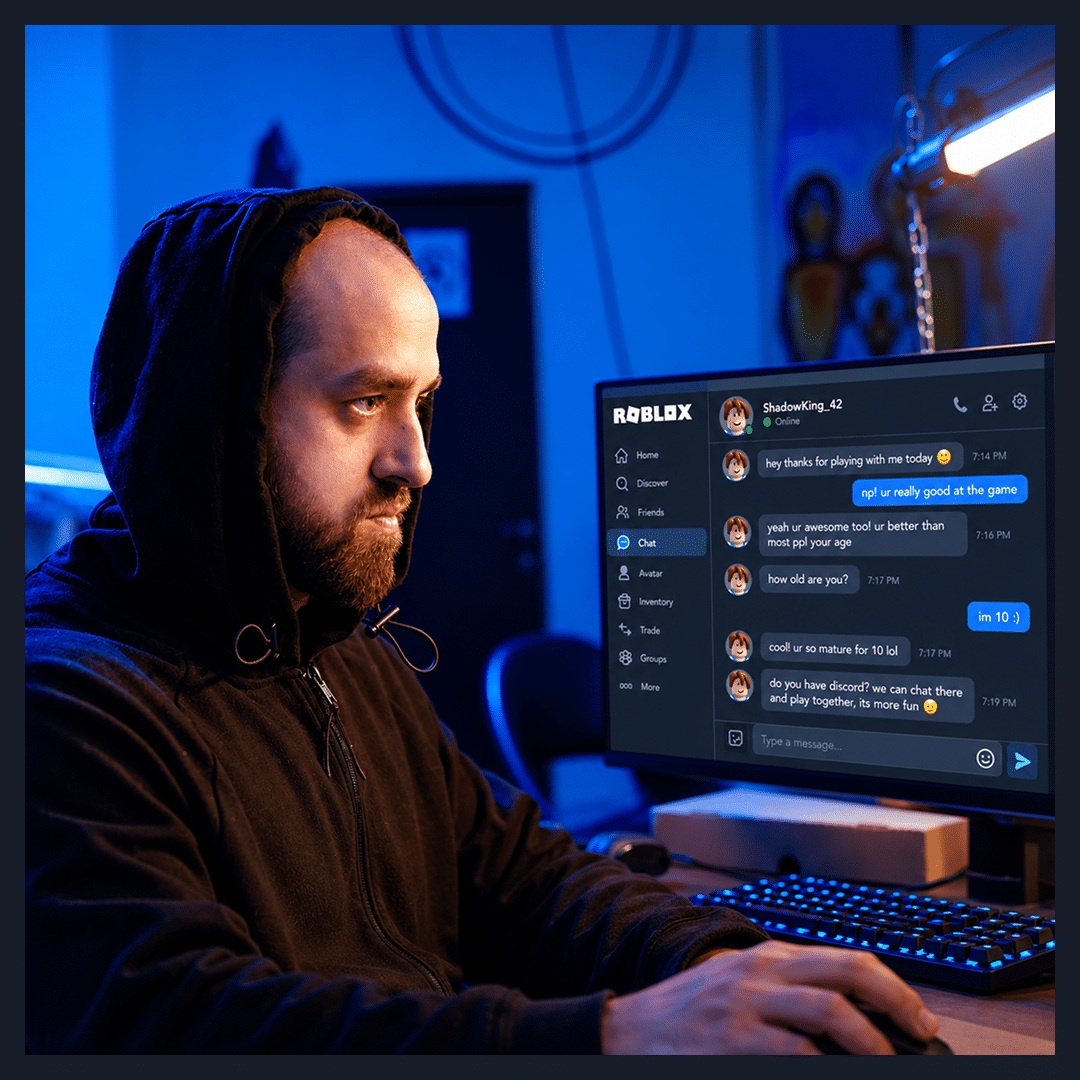
The stranger who feels like a friend
Every month I sit down to research a new risk facing our children online, and every month I tell myself that I have seen the worst of it. This month I was wrong again. What struck me about grooming in online games was not how clever it is, but how ordinary it looks: a friendly player, a shared interest, a few free skins and a conversation that feels like part of the game, right up until the moment it quietly isn’t.
We have spent generations teaching our children not to talk to strangers, not to accept sweets from a car window and not to tell anyone where they live. Yet many of us hand them a game where strangers can talk to them, offer them gifts and ask them questions, all while we sit in the next room believing they are safely playing. The stranger hasn’t gone away. He has simply found a better place to wait.
Games are social networks now
We still talk about games as if they are toys, but the biggest of them are social networks with a scoreboard attached. Roblox reported 138 million daily active users in the third quarter of 2026, and on the same results call the company said 30% of American 13 to 17 year olds use it every single day. These are not fringe corners of the internet. These are the places where our children spend their afternoons, their weekends and their school holidays.
The US National Center for Missing & Exploited Children (NCMEC) puts it plainly: online enticement “takes place across every platform; social media, messaging apps, gaming platforms, etc.” And the risk is not only overseas. In the SA Kids Online study of 2 643 South African children aged 9 to 17, a quarter said they had added people they’d never met face to face, and 18% had sent a photo or video of themselves to someone they’d never met. Our children are already talking to strangers. The only question is whether we know about it.
How it actually happens
Grooming rarely starts with anything that looks dangerous. It starts with kindness. NCMEC lists the most common tactics as building rapport “through compliments, discussing shared interests”, “pretending to be younger” and “offering an incentive such as a gift card”. Internet Matters warns that a groomer “might pretend they’re the same age as your child”, and because there is a screen between them, your child has no way of knowing for sure.
In games, the gift is often built right into the platform. TELUS Wise, a Canadian online safety programme, describes in-game gifts and rewards as “a common tactic used by groomers”, small and inexpensive gestures that act as a conversation starter. Then comes the move. Once trust is built, the groomer suggests carrying on somewhere more private, away from the game’s filters and away from anyone watching.
The numbers tell us where that move leads. In the UK, police recorded 7 263 Sexual Communication with a Child offences in a single year, according to the NSPCC, and where the platform could be identified, 40% happened on Snapchat. In the US, NCMEC received 1.4 million reports of online enticement in 2025, a 158% increase on 2024. I don’t share these numbers to frighten anyone. I share them because a problem this size can’t be left to chance, or to a child’s instinct alone.
The platforms are finally moving, but slowly
In July this year, a lawsuit was filed in the US on behalf of a girl who started playing Roblox at 8 years old. It alleges that a stranger who claimed to be her age contacted her through the game’s chat, told her he loved her and tried to convince her to run away from home. These are allegations and not findings, but her mother’s words stayed with me: she would never have let her daughter play had she known anyone in the world could message her child.
The pressure has started to tell. In January 2026, Roblox made age checks compulsory for anyone who wants to use chat, mostly through facial age estimation, and split users into six age groups that can only chat with the groups directly above and below their own. By April, three US states had reached settlements with the company worth more than US$35 million in eight days, with further age checks and a separate, chat-free experience for children aged 5 to 8.
I welcome every one of these changes. But I would be lying if I said they reassure me. An age check is a fence, not a guardian. It can reduce who reaches our children, but it can’t notice when a child goes quiet at dinner, and it can’t hear the conversation that has already moved to another app.
The signs worth noticing
No single sign proves anything, and I’d caution against panic. But Internet Matters lists several things worth gently paying attention to:
- Strange followers, friends or interactions online
- Multiple accounts on apps and platforms
- Unexplained devices in their possession
- Changes in behaviour or avoiding social situations
- Unexplained school absences
To that I would add one more, drawn straight from how groomers work in games: gifts, game credits or skins from someone your child can’t really explain.
What I’d encourage every family to do
If I could sit across the table from every parent reading this, this is what I would say.
- Get the settings right. Make sure your child’s account has their real age and completes the age check, so the platform’s restrictions actually apply. For younger children, switch chat off or limit it to friends you know.
- Play with them. Not once, not to inspect, but often enough that you know who their game friends are and what normal looks like.
- Agree on two simple rules. No moving a chat to another app, and no accepting gifts from anyone without telling you first.
- Know every app and every chat. Regularly check the apps installed on your child’s phone, tablet, laptop and console. A new messaging app you don’t recognise is often the first sign that a conversation has moved out of the game and somewhere you can’t see. On the messaging apps themselves, look beyond the main chat list: check archived chats, groups and broadcast lists too, because that’s exactly where a conversation can be tucked out of sight.
- Say the most protective sentence there is. “You will never be in trouble for coming to me.” Say it before anything goes wrong, and say it again.
- Know where to report. South African law already treats this as a crime. Section 18 of the Criminal Law (Sexual Offences and Related Matters) Amendment Act makes it illegal to supply, expose or display child sexual abuse material, or make images available, with the intention of encouraging or persuading someone to perform a sexual act with a child. Report child sexual abuse material to the Film and Publication Board hotline on 0800 148 148 or at www.fpbhotline.org.za, and report any direct threat to your child to SAPS.
Letsema: working together
On 25 November, South Africa begins the 16 Days of Activism for No Violence Against Women and Children, running until 10 December. This year’s theme is “Letsema: Men, Women, Boys and Girls working together to end Gender-Based Violence and Femicide”. Among the actions government asks of communities is one that speaks directly to everything in this post: “Protect children from exposure to violence and harmful content on internet and social media”.
I find something hopeful in that word, working together. Grooming thrives on isolation. It needs a child to feel that the only person who understands them is the one on the other side of the screen, and it needs the adults around that child to be too busy, too unaware or too far away to notice. It is defeated by the opposite: by parents who ask, by schools that listen, by platforms that act and by communities that refuse to look away.
So this November, and through the 16 Days, my challenge is a simple one. Sit down next to your child, pick up the controller and ask who they’re playing with. Not once, but again and again, until the question feels as ordinary as asking about their day. The stranger is counting on our silence. Let’s make sure he doesn’t get it.
Sources and fact-check notes
Not for publishing. Every figure was checked against the page it came from.
- Roblox Q3 2026: 138 million daily active users and “30% of US 13 through 17-year olds” using it daily, both from the earnings call transcript (29 Oct 2026).
- NCMEC: the “every platform” quote and the grooming tactics come from the online enticement page. The 1.4 million online enticement reports and the 158% increase come from CyberTipline data 2025.
- SA Kids Online: UNICEF South Africa, February 2022. It’s the most recent national study of its kind.
- Internet Matters: the tactics quote and warning signs come from the online grooming guide.
- TELUS Wise: the in-game gifts tactic and the move to a private app come from this article (5 Nov 2025). It’s a Canadian source.
- NSPCC: 7 263 offences and 40% on Snapchat where the platform was known come from this release. This is UK data, and the release doesn’t name the exact year.
- Oregon lawsuit: KPTV (14 Jul 2026). These are allegations only, and the blog says so.
- Roblox age checks: TechCrunch (7 Jan 2026) covers the six age groups and chat with adjacent groups only. Malwarebytes (23 Apr 2026) covers the Alabama, West Virginia and Nevada settlements totalling more than US$35 million in eight days and the chat-free experience for ages 5 to 8.
- Section 18: worded as Vuk’uzenzele describes it (government, 2019). I couldn’t open the Act itself to confirm the full wording of section 18, so the blog stays close to the government’s summary.
- FPB hotline: 0800 148 148 and www.fpbhotline.org.za are confirmed on the FPB child protection page.
- 16 Days of Activism: the dates, the Letsema theme and the harmful content quote come from gov.za. The page body still says “2025” in one place, but its header gives 25 November to 10 December 2026.
- Personal framing: the blog is written in first person but never claims you’re a parent. It speaks to parents rather than as one.